Saarathi · Read. Ask. Write.

A printed book you can listen to, ask about—and write in.

Saarathi is a reusable electronic folio. Put a printed booklet in it and it reads the page aloud and answers questions about it. Put ordinary paper in it and write: an EMR layer under the page captures every stroke, and dvani reads your handwriting — your working, your sketch, your answer — so the conversation starts from what you wrote. Choose the experience: a course, a story, or family memories.

Folio ₹2,200, included in every course bundle. Printed booklets from ₹250. One ₹750-a-month learner subscription covers every course you buy.
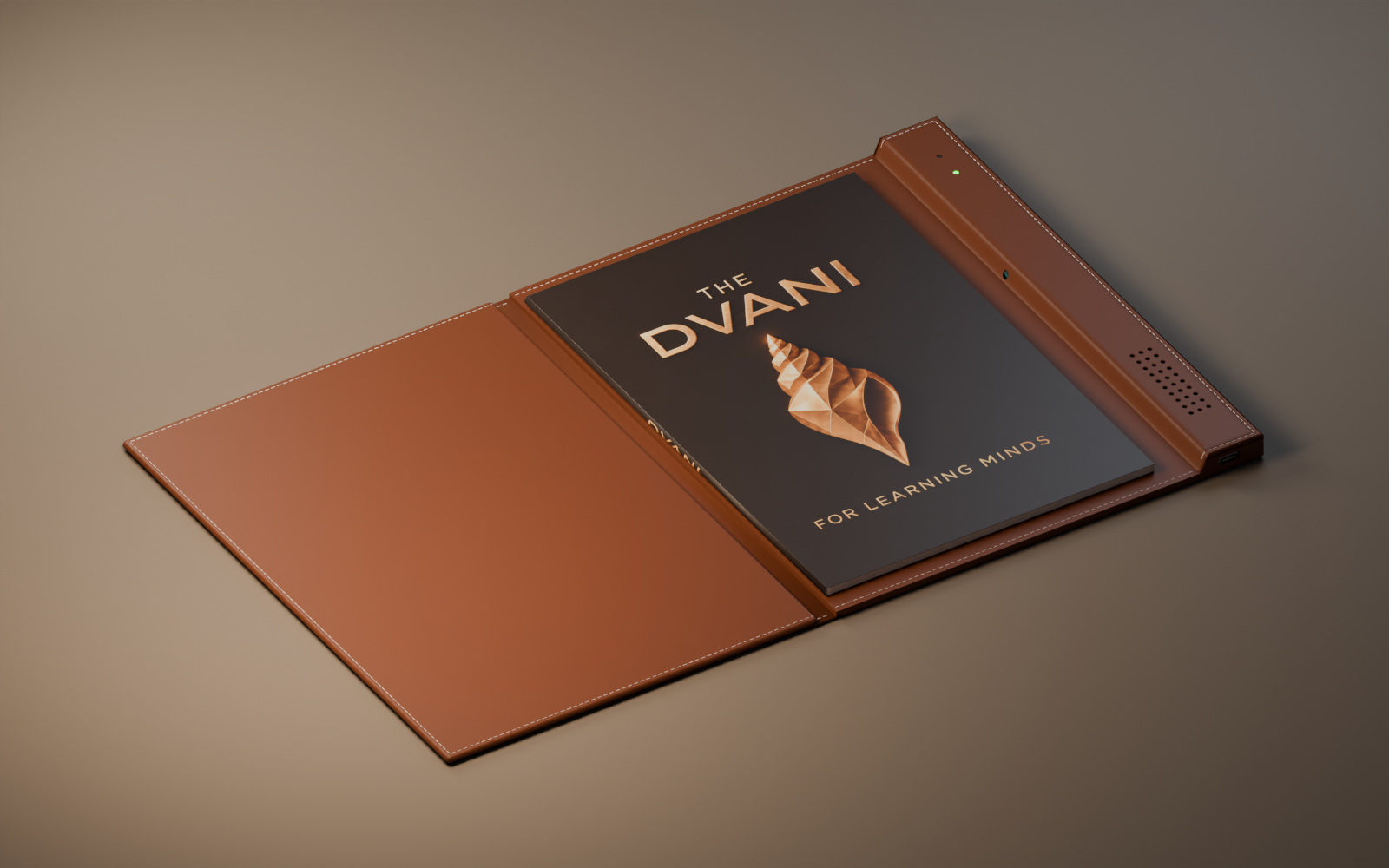
The Saarathi folio, open, with a printed booklet inside

Four parts, and each does one job.

1 · The folio

The electronics

The reusable part. It holds the booklet, knows which spread is open, and carries the microphone, speaker, wi-fi and the EMR sensing layer. You buy it once and it reads every booklet you own — and every page you write.

2 · The booklet

The printed pages

The part that changes. Your photographs, a course chapter, or a story — printed, bound, and swapped in and out of the folio.

3 · The content

The narration and the answers

What the folio says: the recorded or spoken narration for each page, and the material its answers come from. Narration plays from the folio; asking a question needs a connection.

4 · The pen

The writing layer

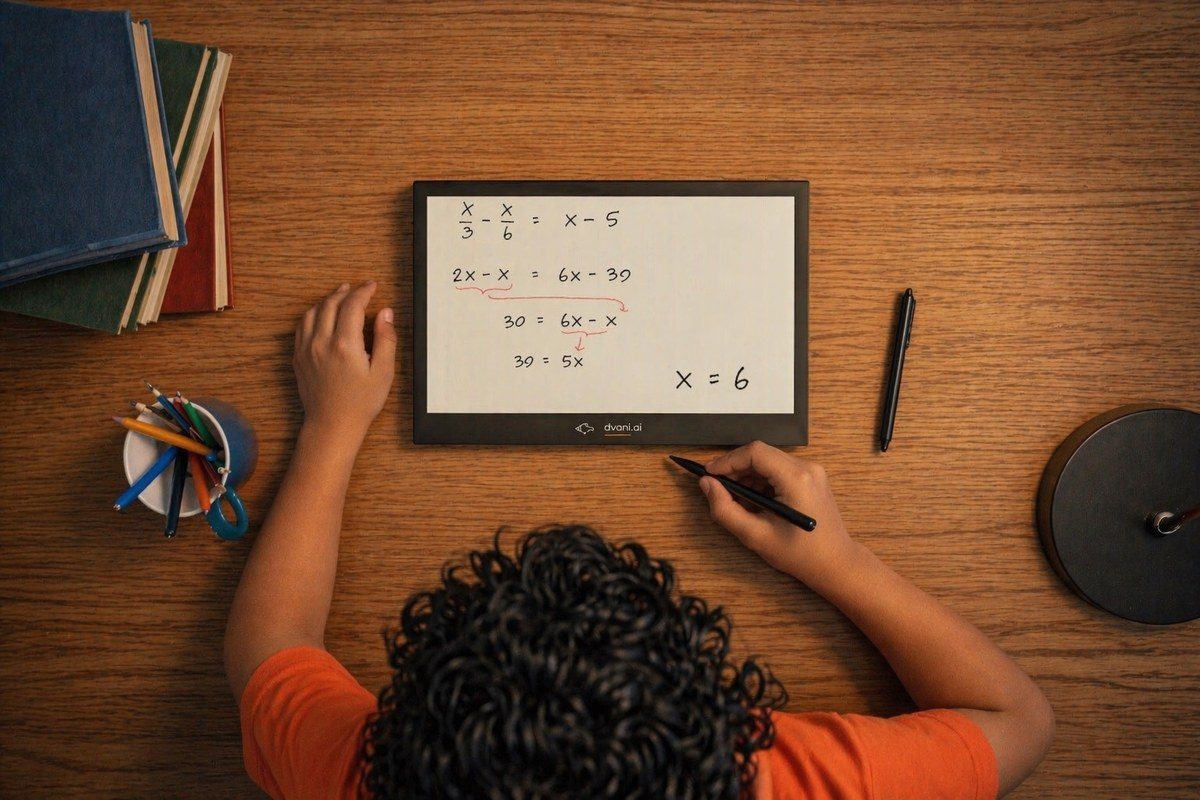
An EMR pen with no battery, and ordinary paper on the folio's sensing layer. Every stroke is captured on its page as you make it, and a vision-language model reads it — words, working, diagrams — so you can ask about a step you wrote.

Write your working. Then talk it through.

Read the chapter in the booklet, then work it out on paper in the same folio. Ask about a step and dvani answers about the working you actually wrote — not a question you typed. A learner whose solution comes out wrong asks “where did my reasoning go wrong?” and is pointed at the step, asked what should happen there, and left to make the correction.

The same layer answers the mock tests and exams in every course: topic tests with hints, full mocks under a timer, handwritten on the EMR pad and reviewed against the model answer. And for a notebook at work: sketch a plan, capture an idea in a meeting, then be questioned about your own thinking by something that can see what you wrote.

Nothing is photographed. The strokes are sensed through the paper; the model reads that record, not a camera image.

A hand working through a problem on paper in the folio

Build it once. It reads forever.

The pages freeze when you order. The voice and the answers never do — re-record a page or change what it says about a page any time, even years after it was printed.

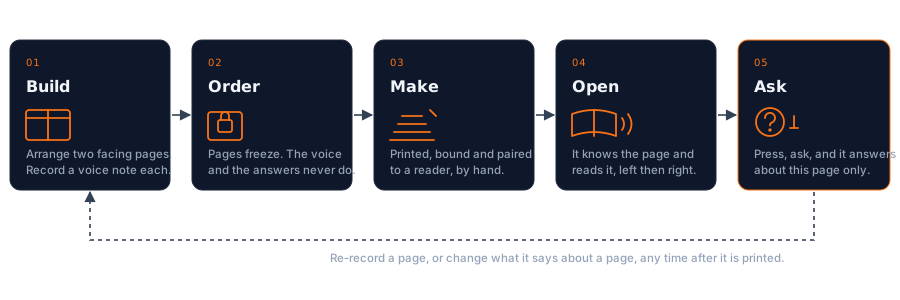
Build, order, make, open, ask — and the loop closes because audio stays editable

Turn the pages. Hear them.

This is a real Smart Album in your browser — drag the corner to turn a page and it reads, left then right. It is the same album the reader would play from paper.

Sound on. On a phone, swipe the page.Create your albumTry the sample album

This is the Smart Album. Explainer and Storybook demos need finished content — a lesson a teacher has checked, a story with its artwork and narration done — so they are not here yet rather than being stood in for.

One folio. Four kinds of booklet.

Courses

Illustrated courses, tutored by voice and by hand

CBSE, entrance exams, professional study and languages: sets of 60-page booklets with practice, topic tests and mock exams written on the EMR pad.

Smart Album

Photos with voices and stories

Preserve photographs with the memory behind each one, recorded in your own voice.

Explainers

Printed courses you can ask about

Explore a subject through printed lessons, and ask about the step that is unclear.

Storybooks

Personalised stories with voice interaction

A printed story to read together, with narration and a conversation about it.

One folio. Every reason to buy the next booklet.

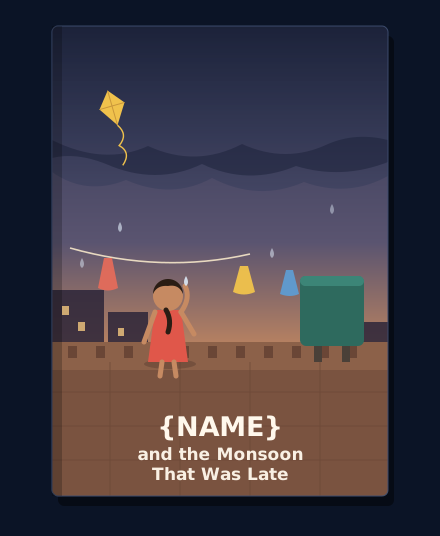
The cover of {NAME} and the Monsoon That Was Late: a child on a Bengaluru terrace watching for the first rain.
Storybook · ages 2–8

A story that talks back

An illustrated printed story that reads itself aloud in the folio and answers your child's questions about the page. Personalised with their name and a dedication.

from ₹250 a booklet
  • Your child's name through the story
  • Narrated by us, or by you in Studio
  • First service year included
A worked physics example
Explainer · Class 10–12

A chapter that answers back

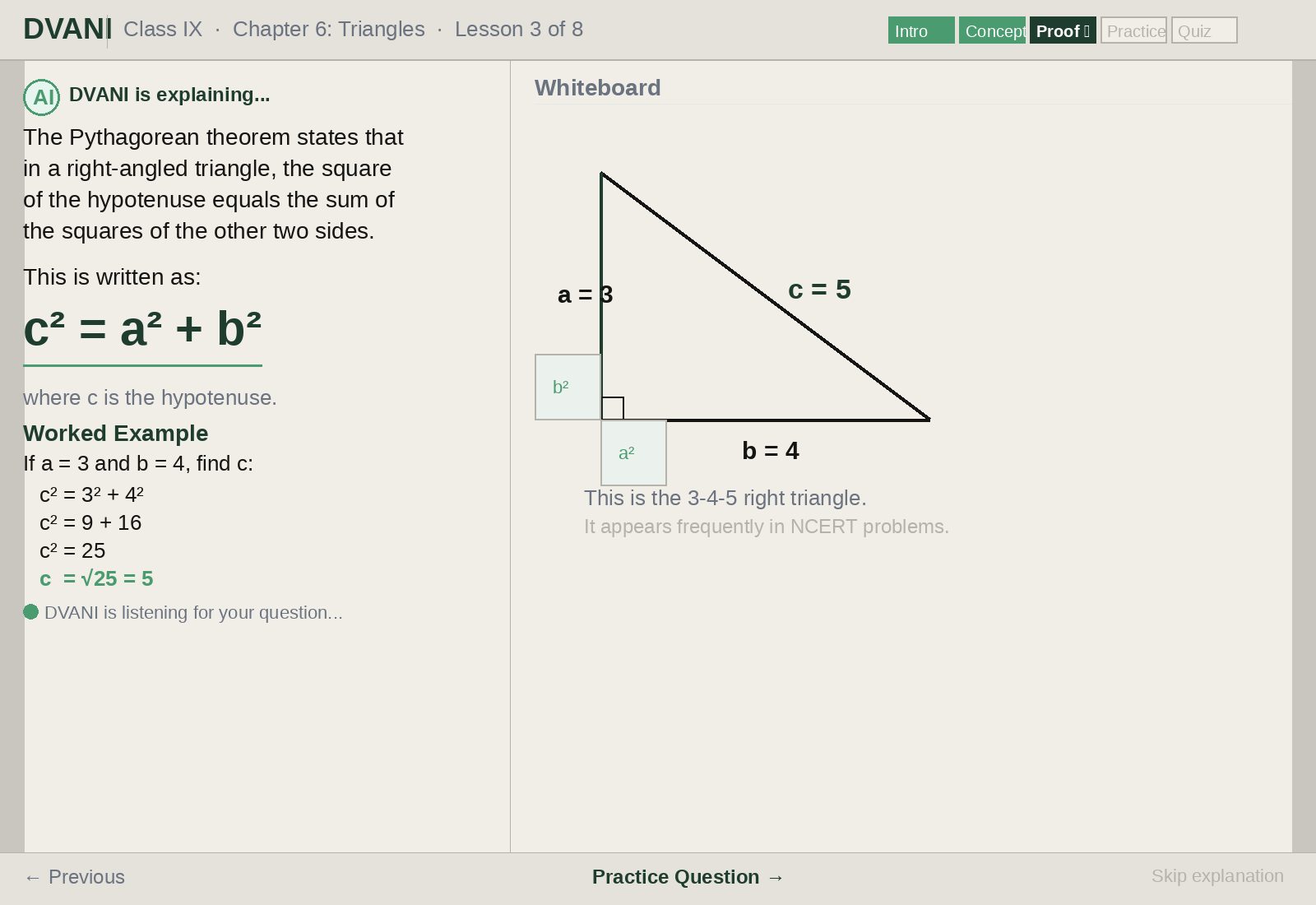
One chapter per booklet, read at your class's level. Ask "why does the ball stop?" and it answers in two sentences. When the answer needs a diagram, it puts it on the phone.

from ₹250 a chapter
  • Science and maths, CBSE first
  • First chapter in review: Class 12 Physics, Current Electricity
  • Service ₹180 a month, billed separately
Hands on an open booklet
Smart Album · families

Every page, in the voice that was there

Arrange your photographs two pages at a time, record a voice note per page, and it becomes a bound booklet that reads itself. Share the studio link so grandparents narrate their own wedding.

from ₹250 a booklet
  • Studio in the browser, no app
  • Up to 50 seconds a page
  • Re-record any page after printing

Their name, in a story that asks them what they think.

Choose a story and it is set with your child's name and a dedication from you. The stories are set in real places — a Bengaluru terrace in June, the boulders at Hampi, a Ramzan night in Old Delhi — and written without rhyme, so the name fits every line. The book reads itself in our narrator's voice, or in yours, recorded by you in Studio. And it asks your child a question on every page.

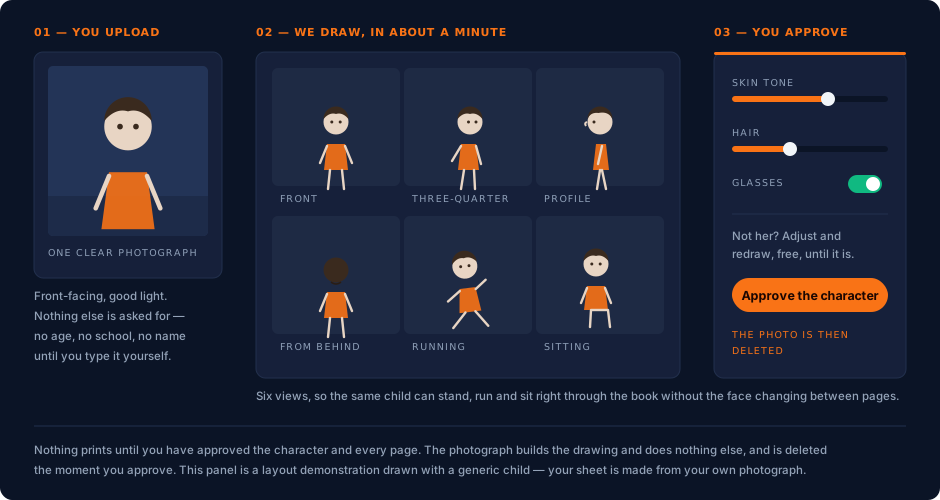
Drawing your child into the illustrations, from a photograph, is the next step and is not offered yet. It needs a consent, character-approval and page-approval process that is still being built, and we would rather not take a photograph of a child before that exists. Titles appear here as each one finishes artwork and narration.

One photograph in, six drawn views of the same child out — front, three-quarter, profile, from behind, running and sitting — then the controls you use to approve or adjust before anything prints.

It doesn't answer the question you ask. It asks what you think first.

A chapter in a booklet, at the level of your class. Open a page and it reads. Press and ask, and it answers about that page in two or three sentences — from context written when the chapter was made, never the open internet. Definitions and explanations stay spoken; diagrams, tables and multi-step working go to the companion app on a phone, and the reader says "I've put the diagram on the phone."

Classes 10, 11 and 12, science and mathematics, starting with CBSE. The first chapter in review is Class 12 Physics, Current Electricity. No chapter has finished subject review yet, so none is on sale — a printed lesson that answers questions is only worth buying once a teacher has checked what it says.

The chapter service is ₹180 a month and is billed separately from the printed chapter. The free first year that comes with a Smart Album or a Storybook does not apply to it.

A worked example from the Laws of Motion chapter

Your father narrates his own wedding album. His grandson asks it questions.

The studio runs in a browser: arrange two facing pages at a time — photographs keep their own shape, drag and resize, or let it auto-arrange — and record up to fifty seconds for each page. Share the link and a grandparent records from their own home. Order when you're ready; we print, bind and pair it to a reader, and it reads itself, left page then right.

Come back and re-record a page after it is printed. Tell it what to say about a page — who is in it, where it was — and when a child asks, it answers in the voice that was there.

Placeholder · PhotoA grandmother recording into a laptop, her own photographs on the screen

The book only knows what's in the book.

Closed to the internet

Answers come from what was written when the booklet was made. Not in the book — "the book doesn't say", warmly.

The mic opens on a press

Or the wake word, and at no other time. Narration is offline; only asking needs a connection.

We don't take a child's photograph

Nothing on this page asks for one. Drawing a child into a story is not offered until the approval process behind it is built.

No voice is cloned

Not a child's, not a parent's. A recorded narration is the recording you made — played back, not imitated.

Parents can read what was asked, and deletion is available on request. Nothing a child says is used to train a model. We publish the exact retention window once it is tested, and the conformance reviews when they are done.

What do I get for ₹2,200?

The folio itself — the reusable electronic holder that reads booklets, answers about them and captures what you write — with its EMR pen. Booklets are bought separately, from ₹250, and one folio reads them all. Every course bundle on the Marketplace includes a folio; if you already own one, the bundle is ₹2,200 less.

What pen and paper does it use?

Ordinary paper, and the EMR pen that comes with the folio; an EMR pen has no battery to charge. Supported paper sizes and other EMR pens will be listed here.

Does it take a photo of my page?

No. The strokes are sensed through the paper as you write; the handwriting model reads that record, not a camera image.

What happens if I don't renew the voice agent?

Every booklet you own keeps reading itself, forever, from the reader. A newly bought booklet always activates. Only asking questions and re-recording pages in the studio need an active plan.

How many pages is a booklet?

Sixteen pages in the first print run. We'll say the exact size and paper on the product before it ships.

Can I use my own voice for a Storybook?

Yes — you record the pages yourself in Studio, and what plays back is your recording. We do not clone voices, so we cannot read new pages in your voice later; re-recording a page is how it changes.

Does it need a phone?

Not for reading or asking. The Explainer's companion app on a phone is where diagrams and worked steps appear; the reader works on its own without it.

Every booklet is a reason to open the folio again.

One folio, and the kind of booklet you want it to read.

Explore the booksSee all booklets